I got a lost 2024 check in 2025 :)
Usually my last name has a typo, so I may send a check to Don XD

I got a lost 2024 check in 2025 :)
Usually my last name has a typo, so I may send a check to Don XD
Technical Reviewer:

A book where the art of troubleshooting is summarized into best practices and clearly explains what happens under the hood of the JVM is always welcome.
"Java Troubleshooting, 2nd Edition" delivers exactly that, offering a practical and straightforward guide for solving complex issues in Java applications.
Memory & Heap: Having a heap memory leak is sometimes a hard task to diagnose; however, Chapter 11 explains in detail how to detect, analyze, and fix it step by step.
Profiling & Performance: It shows how to find real bottlenecks using tools like JProfiler, VisualVM, and Java Flight Recorder, moving from guesswork to data-driven decisions.
Threads & Concurrency: It describes how to interpret thread dumps, identify deadlocks, and understand thread behavior in production systems.
Transactions & Consistency: Last but not least, data transactions and consistency are the cornerstone of a well-designed application. The book provides details, tips and tricks, and clear explanations that are always helpful for maintaining integrity and stable behavior.
AI-Assisted Troubleshooting: This new edition also introduces AI-based stacktrace analysis, making life easier for developers. It not only highlights how AI can speed up diagnosis but also recommends how to use these new trends responsibly—ensuring AI remains a helpful tool rather than becoming yet another problem to solve.
From: https://www-cs-faculty.stanford.edu/~knuth/news25.html
Se llama cacofonía a la disonancia que produce la combinación inarmónica de sonidos en una frase o palabra. La palabra, como tal, proviene del griego κακοφωνία (kakophonía), que se compone de las raíces κακός (kakós), que significa ‘malo’ o ‘desagradable’, y φωνή (phoné) que significa ‘sonido’.
La cacofonía puede producirse como consecuencia de la repetición innecesaria, exagerada o cercana de un sonido en una misma frase. Así, ejemplos de cacofonías podrían ser:
Technical Reviewer:
Julia Quick Syntax Reference - A Pocket Guide for Data Science Programming
2025
Author: Lobianco, Antonello
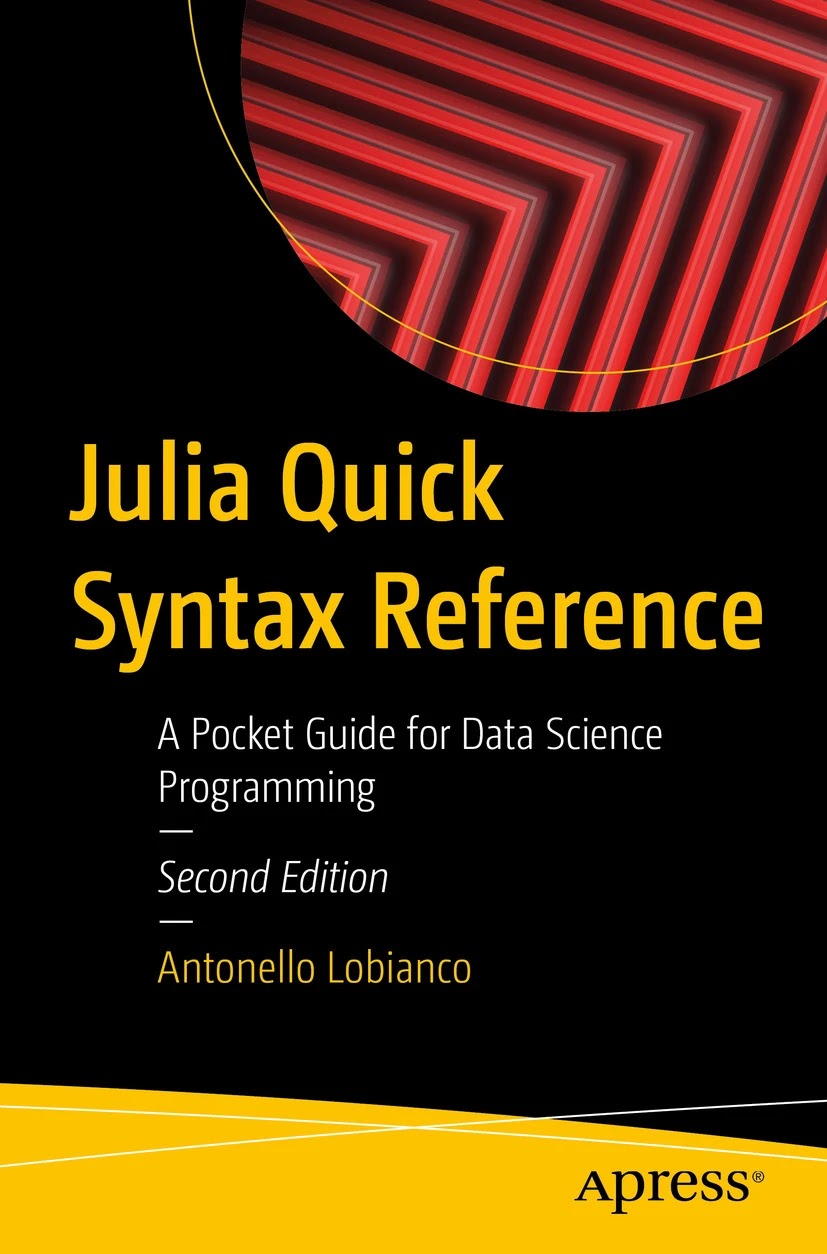
https://github.com/Apress/Julia-Quick-Syntax-Reference-2nd-ed
Technical Review:
Upcoming book from Apress Called Magical-Haskell
https://github.com/Apress/Magical-Haskell
https://link.springer.com/book/9798868812811

former: https://leanpub.com/magicalhaskell/read


What is Kafka?
Apache Kafka is an open-source distributed event streaming platform used by thousands of companies for high-performance data pipelines, streaming analytics, data integration, and mission-critical applications. (kafka.apache.org)
.drawio.png)


(2).drawio.png)
CoConsumer
Offsets:
Kafka tracks the last processed message for each consumer group in a topic using an internal topic called __consumer_offsets.
.png)
.png)


Apache Kafka is a scalable, fault-tolerant, publish-subscribe, streaming messaging system widely used for communication and integration in distributed architectures.
Consumer Groups: enable multiple consumers to process data collaboratively, enhancing scalability and fault tolerance. One consumer from a Group read several partitions, but a partition can have only one consumer from a consumer group.
Topics: abstract concept where messages
are dispatched, which are divided into partitions to distribute load.
Partitions & Replication:
Serialization: converts data into binary format
for efficient transmission and storage, supporting both native and custom
serialization.
Security Layers in Kafka Kafka provides robust security options, including:
Design
Patterns & Anti-Patterns Mentioned in previous presentations, some
key patterns include to be used with Kafka:
Schema Registry
paráfrasis
Del lat. paraphrăsis, y este del gr. παράφρασις paráphrasis.
1. f. Explicación o interpretación amplificativa de un texto para ilustrarlo o hacerlo más claro o inteligible.
La paráfrasis consiste en decir con palabras más sencillas y con menos palabras técnicas las ideas propias obtenidas de un texto predeterminado.


